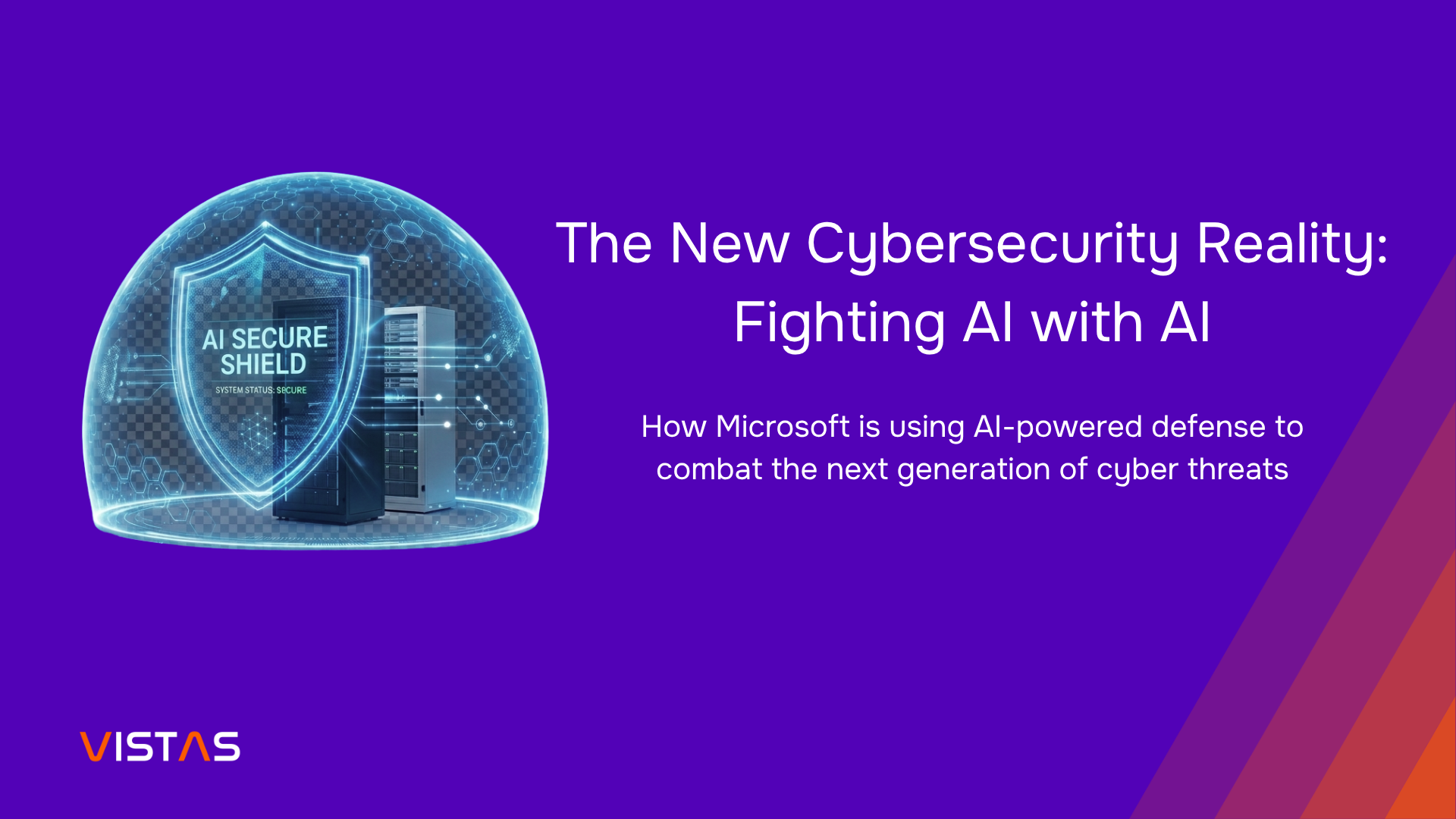
Cybersecurity is entering a new phase — one where attackers are no longer just skilled; they’re augmented by AI.
As artificial intelligence rapidly transforms the workplace, it is also reshaping the cybersecurity landscape. In 2026, Microsoft identified AI-powered cyber threats as one of the fastest-growing risks facing businesses worldwide.
Attackers are now using generative AI to launch more convincing, scalable, and automated attacks — forcing organizations to rethink traditional security strategies.
But here’s the shift: the same technology is now powering the next generation of defense.
Microsoft Security teams continue to report a significant rise in sophisticated cyberattacks driven by AI technologies, including phishing, credential theft, deepfake impersonation, and malware automation. In response, Microsoft is embedding AI-powered defense capabilities directly into its security ecosystem through products such as Microsoft Defender and Microsoft Security Copilot.
The Rise of AI-Powered Cyber Threats
Cybercriminals are now leveraging AI tools to improve both the speed and effectiveness of attacks. Unlike traditional threats that often relied on manual effort and generic messaging, AI-driven attacks are becoming increasingly personalized, intelligent, and difficult to detect.
AI-Generated Phishing Attacks
One of the most alarming trends is the rise of AI-generated phishing campaigns. Attackers are using generative AI to create highly convincing emails, messages, and fake websites that closely mimic legitimate communications.
These phishing attempts can:
- Replicate writing styles of executives or coworkers
- Generate grammatically flawless emails in multiple languages
- Personalize attacks using publicly available information
- Adapt messaging dynamically based on user behavior
This makes phishing campaigns significantly more believable than older spam-style attacks, increasing the likelihood of users clicking malicious links or revealing sensitive credentials.
Microsoft has reported billions of phishing-related signals and attacks detected globally in early 2026, highlighting the scale of the growing threat landscape.
Automated Credential Attacks
AI is also accelerating credential-based attacks. Threat actors are automating password spraying, brute-force attempts, and account takeover campaigns using intelligent systems that can analyze patterns and optimize attack timing.
Modern AI-driven credential attacks can:
- Identify weak authentication points
- Mimic legitimate login behaviors
- Avoid detection by rotating IP addresses and attack methods
- Launch attacks continuously at massive scale
As organizations continue adopting hybrid work environments and cloud applications, identity security has become a major area of focus for Microsoft.
This is why Microsoft is heavily emphasizing:
- Multi-factor authentication (MFA)
- Passwordless authentication
- Conditional access policies
- Identity threat detection
through platforms such as Microsoft Entra ID and Microsoft Defender for Identity.
AI-Enhanced Malware and Ransomware
Another growing concern is the use of AI to enhance malware development and ransomware operations.
AI-assisted malware can:
- Modify its behavior to avoid antivirus detection
- Analyze system environments before execution
- Automate reconnaissance activities
- Adapt attack techniques in real time
Cybercriminal groups are increasingly using AI to accelerate malware development cycles and improve the precision of ransomware targeting.
Microsoft security researchers have warned that AI-enabled attacks are reducing the technical barrier for cybercrime, allowing less experienced attackers to execute more sophisticated operations.
Microsoft’s AI-Driven Security Response
To combat these evolving threats, Microsoft is embedding AI directly into its cybersecurity stack.
Microsoft Defender
Microsoft Defender has evolved beyond traditional endpoint protection into a comprehensive AI-powered security platform that spans:
- Endpoints
- Cloud applications
- Identities
- Servers
- Data
Defender uses machine learning and threat intelligence to:
- Detect abnormal behavior patterns
- Correlate security signals across environments
- Automatically isolate compromised devices
- Respond to threats in near real time
The platform continuously analyzes massive volumes of global threat data, allowing organizations to proactively identify suspicious activities before they escalate into major incidents.
Microsoft Security Copilot
Microsoft Security Copilot represents Microsoft’s next-generation AI security assistant designed specifically for cybersecurity teams.
Built using generative AI and Microsoft’s global threat intelligence, Security Copilot helps analysts:
- Investigate incidents faster
- Summarize complex attack data
- Generate remediation guidance
- Automate repetitive security tasks
- Improve response times
Instead of manually reviewing thousands of alerts, security teams can use natural language prompts to analyze incidents and receive AI-assisted recommendations instantly.
This significantly improves operational efficiency for security operations centers (SOCs), especially as cybersecurity talent shortages continue globally.
Why This Matters for Businesses
The rapid rise of AI-powered cyber threats means organizations can no longer rely solely on traditional perimeter-based security models.
Businesses now need:
- AI-enhanced security monitoring
- Strong identity protection
- Zero Trust security strategies
- Continuous threat detection
- Employee cybersecurity awareness
- Automated incident response
For organizations already investing in Microsoft technologies such as Microsoft 365, Microsoft Azure, and Dynamics 365, Microsoft’s integrated security ecosystem is becoming a critical component of digital transformation strategies.
The Bigger Industry Shift
The cybersecurity industry is entering a new phase where AI is being used by both attackers and defenders simultaneously.
The key challenge for businesses moving forward is no longer simply preventing attacks — it is:
- Detecting threats faster
- Responding automatically
- Reducing human error
- Building cyber resilience at scale
Microsoft’s 2026 strategy clearly shows that AI security is no longer an optional enhancement. It is becoming foundational to how modern organizations protect users, devices, identities, and data in an increasingly intelligent threat environment.
How Businesses Can Prepare
As AI-powered threats continue to evolve, organizations need more than just traditional security tools — they need a proactive security strategy that combines modern protection, user awareness, identity management, and intelligent threat response.
This is where the right technology partner becomes critical.
At VISTAS Cloud, we help organizations maximize the full potential of Microsoft’s security ecosystem through:
- Microsoft 365 security optimization
- Microsoft Defender deployment and management
- Identity and access security with Microsoft Entra
- Security posture assessments
- AI readiness and governance
- Cloud security and compliance strategies
As businesses continue embracing AI, cloud platforms, and hybrid work environments, cybersecurity can no longer be treated as a secondary IT function — it must become part of the overall business transformation strategy.
The future of cybersecurity will not simply depend on who adopts AI first — but on who secures it best.